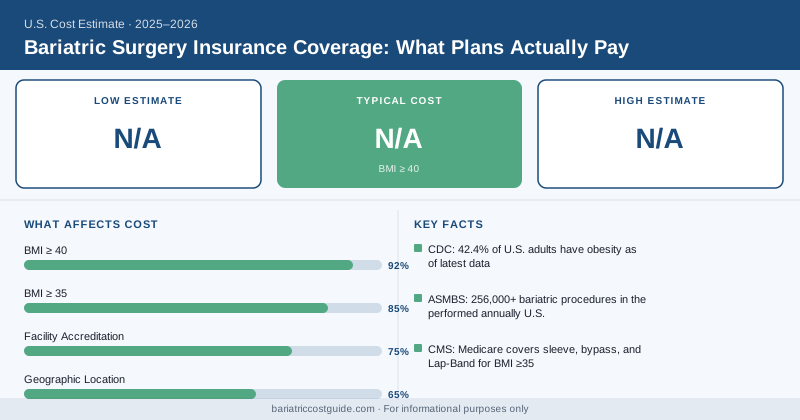
Bariatric Surgery Insurance Coverage: What Plans Actually Pay
{ if eq .Lang "zh" }{ else }{ end }About 45% of U.S. commercial insurance plans now cover bariatric surgery — up from roughly 35% a decade ago, as obesity-related costs have forced insurers to reckon with the long-term economics of untreated obesity. But coverage varies wildly, and the 55% that don’t cover it at all means millions of patients are left to self-pay or do nothing.
Here’s how to find out if you’re covered, what the process looks like, and what to do when your claim gets denied.
The NIH Criteria: The Medical Standard for Coverage
Insurance coverage for bariatric surgery is almost universally based on the 1991 NIH Consensus Statement on Gastrointestinal Surgery for Severe Obesity. The criteria:
- BMI ≥ 40 with no requirement for comorbidities, OR
- BMI ≥ 35 with at least one obesity-related comorbidity: type 2 diabetes, hypertension, sleep apnea, hyperlipidemia, osteoarthritis, or other documented conditions
If you meet these criteria and your plan covers bariatric surgery, you have a solid foundation for approval. If your BMI is below 35, you’ll face significant barriers regardless of plan type.
| BMI Range | Typical Coverage Availability |
|---|---|
| BMI ≥ 40 | Usually covered if plan includes bariatric benefit |
| BMI 35–40 + comorbidity | Usually covered with proper documentation |
| BMI 30–35 + comorbidity | Sometimes covered; requires strong medical necessity |
| BMI < 30 | Almost never covered by surgery; some plans cover medication |
Does Your Specific Plan Cover It?
The fastest way to find out: call the member services number on your insurance card and ask specifically: “Does my plan include a bariatric surgery benefit?” You want a yes or no on the benefit, not a general statement about what the plan covers.
If yes, ask:
- What procedures are covered (sleeve, bypass, DS)?
- What are the medical necessity criteria?
- Which facilities and surgeons in my area are in-network?
- What pre-authorization requirements apply?
Get answers in writing — ask them to send a benefits summary or note the reference number of the call.
The ERISA Self-Funded Plan Loophole
Here’s something most patients don’t know: if your employer has more than about 100 employees, your health insurance is likely “self-funded” — meaning your employer actually pays the claims, not the insurance company. These plans are governed by federal law (ERISA) and are NOT required to follow state insurance mandates.
This matters because some states have passed laws requiring insurance plans to cover bariatric surgery. Those state mandates don’t apply to self-funded ERISA plans. Your coworker on the same insurance card may have different bariatric benefits than you depending on which plan your employer selected.
The bottom line: state coverage mandates don’t protect you if your employer is self-funded.
How to Check if Your Plan Is Self-Funded
Ask your HR department: “Is our health plan self-funded or fully insured?” They’re required to tell you.
Alternatively: look at the front of your insurance card. If it says “Administrative services only” (ASO) or mentions a third-party administrator (TPA) alongside an insurer like Aetna or BCBS, it’s likely self-funded.
In self-funded plans, benefits are determined entirely by the plan document your employer chose — not by your state’s insurance laws.
What Prior Authorization Actually Looks Like
Even if your plan covers bariatric surgery, you’ll need prior authorization — advance approval — before the procedure. The process typically takes 2–6 months and requires:
- Documentation of BMI — recent measured height and weight from a healthcare provider
- 3–6 months of supervised diet documentation — regular check-ins with a physician or dietitian, documented in your medical record
- Psychological evaluation — from a licensed psychologist or psychiatrist who evaluates you for eating disorders, compliance readiness, and psychological contraindications
- Nutritional counseling — documented visits with a registered dietitian
- Medical clearance — from your PCP, and sometimes cardiology or pulmonology
- Sleep study — many plans require documentation of sleep apnea screening or diagnosis
- Letter of medical necessity — from your bariatric surgeon summarizing your case
Missing any one of these typically results in denial. Work with a bariatric program coordinator — most accredited centers have one — to manage this process.
What Insurance Typically Pays
With an in-network surgeon at an in-network facility, insurance typically covers 80–90% of the “allowed amount” (the plan’s negotiated rate, not the billed charge) after your deductible. Here’s a realistic scenario:
Gastric sleeve at in-network hospital. Billed charge: $22,000. Plan’s allowed amount: $14,000. Your deductible: $2,000 (already met). Your coinsurance: 20%. Your share: 20% of $14,000 = $2,800 + any remaining deductible.
Out-of-pocket maximum matters too. Most plans cap your annual out-of-pocket at $5,000–$10,000. If you’ve had other medical expenses that year, your bariatric surgery may cost less than you expect.
When Insurance Denies You
First denial doesn’t mean final denial. Bariatric surgery denial appeal success rates are surprisingly high when the appeal is properly documented. Your appeal should include:
- A formal appeal letter from your bariatric surgeon citing clinical evidence and the specific denial reason
- Peer-reviewed literature supporting surgical treatment for your specific BMI and comorbidities
- Documentation of all the supervised diet and evaluation requirements completed
- A letter from your PCP supporting medical necessity
Most denials are overturned at level 1 or level 2 appeal when properly documented. If internal appeals fail, most states have an external review process where an independent physician reviews the case.
The Bottom Line
About 45% of U.S. commercial plans cover bariatric surgery, but coverage rules vary enormously. The NIH criteria (BMI ≥ 40 or ≥ 35 + comorbidity) are the medical foundation, but your specific plan’s rules govern what actually gets approved. Call your insurer directly, get answers in writing, work with an accredited program’s coordinator, and appeal any initial denials with thorough clinical documentation.
{ if eq .Lang "zh" }Disclaimer: BariatricCostGuide provides cost data for educational purposes only. We are not a medical provider, insurance company, or financial advisor. All costs are estimates based on published data and vary by location, facility, surgeon, insurance plan, and individual health factors. Consult a board-certified bariatric surgeon and your insurance carrier for personalized medical and cost advice.