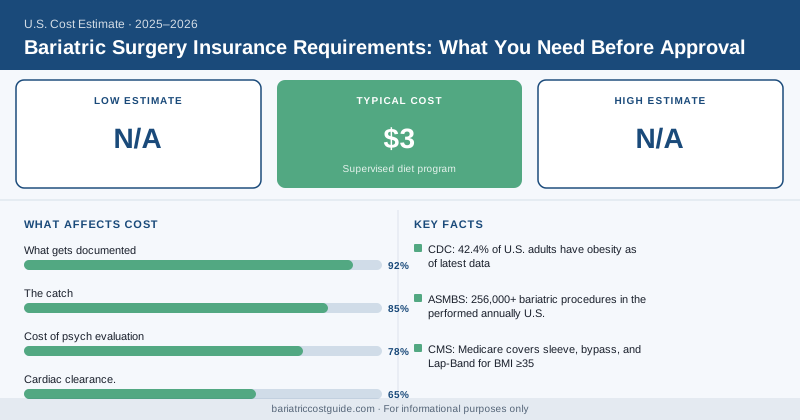
Bariatric Surgery Insurance Requirements: What You Need Before Approval
{ if eq .Lang "zh" }{ else }{ end }Most patients are shocked to learn bariatric surgery insurance approval can take 3 to 6 months — sometimes longer. You don’t just call your surgeon and schedule. You jump through a specific set of hoops, in a specific order, and document everything.
Miss one step and your authorization gets denied. Complete everything correctly and the approval rate for well-documented cases is above 80% for patients who meet the clinical criteria. Here’s exactly what most plans require.
The Standard Pre-Authorization Requirements
While requirements vary by insurer and plan, most commercial plans that cover bariatric surgery require all of the following before they’ll issue prior authorization:
| Requirement | Typical Duration | Notes |
|---|---|---|
| Supervised diet program | 3–6 months | Must be documented in medical records |
| Psychological evaluation | One-time | Licensed psychologist or psychiatrist |
| Nutritional counseling | 3–6 visits | With registered dietitian |
| Medical clearance (PCP) | One-time | Current H&P within 30–90 days |
| BMI documentation | Ongoing | Measured (not self-reported) height/weight |
| Comorbidity documentation | Ongoing | If BMI 35–40, need documented conditions |
| Surgeon evaluation | One-time | MBSAQIP-accredited surgeon required |
The Supervised Diet Requirement: What It Actually Means
This is the requirement that trips people up most often. “Supervised diet” means regular, documented visits to a physician (usually your PCP) during which your weight, diet attempts, and weight-related health status are recorded in your medical records.
What it doesn’t mean: a formal diet program like Weight Watchers, Noom, or any commercial program. What matters is medical documentation, not which diet you followed.
What gets documented: Your weight at each visit, your BMI, any diet counseling provided, medications tried (if relevant), and your response to dietary interventions.
The catch: You need to actually show up. A doctor’s note written retroactively saying “patient has been on a diet for 6 months” doesn’t satisfy the requirement — your insurance wants visit dates in the medical record.
Start Your Supervised Diet Paperwork the Moment You Decide
The supervised diet clock starts when it starts. You can’t go back and retroactively document visits. If you’re even considering bariatric surgery, start scheduling monthly check-ins with your PCP now — even if you’re 12 months from surgery.
Ask your PCP to note at each visit: current weight, BMI, diet counseling provided, and any weight-related health conditions. This is the documentation your insurance will review.
Psychological Evaluation: What Surgeons and Insurers Are Looking For
The psych evaluation isn’t designed to screen you out — it’s designed to maximize your chance of success. Most evaluations take 1–3 hours and assess:
- History of eating disorders (binge eating, purging, night eating syndrome)
- Current mental health status (depression, anxiety, PTSD)
- Understanding of what surgery involves and what it won’t fix
- Social support system
- Substance use history
- Motivation and readiness for lifelong behavior change
Most patients pass. The evaluation identifies issues that need to be addressed before surgery — not necessarily disqualifiers. A history of depression doesn’t disqualify you; untreated, active depression that would compromise your post-op compliance might delay approval until treated.
Cost of psych evaluation: $400–$1,500. Most insurance plans cover it as part of the pre-surgical workup if you’re in the process of getting bariatric authorization.
Nutritional Counseling Requirements
You’ll meet with a registered dietitian (RD) specializing in bariatric nutrition for 3–6 visits, typically once a month. These visits cover:
- Current eating patterns and nutritional deficiencies
- What your diet will look like immediately after surgery (liquids → pureed → soft → regular)
- Long-term dietary requirements (protein goals, supplement regimens)
- What to expect psychologically with food post-surgery
Most bariatric programs coordinate these visits in-house. They’re typically covered by insurance as part of the pre-authorization process.
Medical Clearances You May Need
Beyond your PCP clearance, your surgeon may require:
Cardiac clearance. If you’re over 50 or have cardiovascular risk factors, most programs require an EKG and sometimes a stress test or echocardiogram. Cost: $200–$1,500.
Pulmonary clearance. If you have diagnosed or suspected sleep apnea, you’ll likely need a sleep study and, if positive, treatment (CPAP) before surgery. Sleep apnea with a neck circumference over 17 inches (men) or 15 inches (women) is common in bariatric candidates.
Endoscopy. Some programs and insurers require upper endoscopy to screen for H. pylori, GERD, or gastric abnormalities before sleeve gastrectomy. Cost: $500–$2,000.
Blood work. A comprehensive metabolic panel, CBC, thyroid panel, HbA1c, lipid panel, vitamin D, B12, iron, and ferritin at minimum. Usually covered by insurance.
How Long the Whole Process Takes
Working backward from surgery date:
- 6 months out: Start supervised diet visits with PCP; schedule bariatric surgeon consultation
- 4–5 months out: Complete psych evaluation; begin nutritional counseling
- 3 months out: Complete remaining medical clearances; surgeon submits prior authorization
- 4–8 weeks before surgery: Insurance reviews and issues approval (or denial requiring appeal)
- Surgery date
Programs with dedicated coordinators move faster. Centers that handle the insurance paperwork in-house take much of the burden off you.
The Bottom Line
Bariatric surgery insurance requirements aren’t arbitrary hurdles — they’re documentation that you’re medically and psychologically prepared for a permanent procedure with lifelong implications. Start the supervised diet documentation immediately, work with an accredited program’s coordinator to manage the process, and get everything in writing. Patients who work systematically through the requirements are approved at high rates; those who try to shortcut the process get denied.
{ if eq .Lang "zh" }Disclaimer: BariatricCostGuide provides cost data for educational purposes only. We are not a medical provider, insurance company, or financial advisor. All costs are estimates based on published data and vary by location, facility, surgeon, insurance plan, and individual health factors. Consult a board-certified bariatric surgeon and your insurance carrier for personalized medical and cost advice.